



Finding the Right Balance
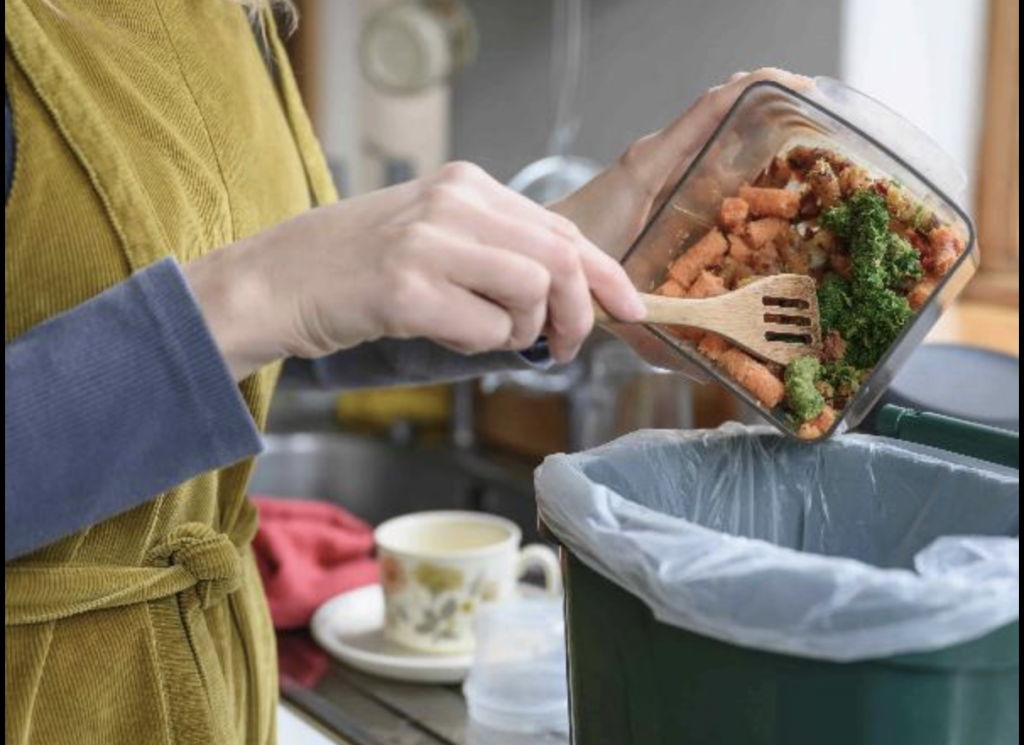
Food shopping is a routine part of everyday life, but how often we shop may have a surprising effect on how much food ends up being wasted.
A recent scientific study by M.A. van Rooijen, J.C. Gerdessen, G.D.H. Claassen and S.L.J.M. de Leeuw explores the relationship between shopping frequency, meal planning and uncertainty in household routines. The researchers asked an important practical question: is it better to shop less often and plan ahead, or to shop more frequently and adapt to changing circumstances?
The answer depends on the household.
Shopping for several days at once can make it easier to coordinate meals, purchases and package sizes. However, everyday life is not always predictable. Family members may eat somewhere else, or an unexpected guest may join for dinner. In such situations, shopping more frequently can provide the flexibility needed to adapt purchases to actual needs.
The study used a mathematical meal-planning model to examine different household situations and shopping frequencies over a 21-day period. The results reveal a clear trade-off: households with stable and predictable routines can benefit from shopping less frequently, while households facing greater uncertainty may benefit from more frequent shopping.
But there is another finding that may be even more useful for everyday life. The researchers found that choosing recipes based on the food already available at home can reduce waste substantially — to as little as 3 grams per day across different levels of household uncertainty. In other words, before deciding what to buy, it can be valuable to first look at what is already in the kitchen.
These findings suggest that there is no single shopping strategy that works for everyone. Instead, effective prevention measures should take household routines and uncertainty into account. A family with a predictable schedule may benefit from advance meal planning, while a more dynamic household may need a more flexible approach.
The study also highlights the potential of digital tools and targeted interventions that could help households choose recipes and make purchasing decisions based on what is already available at home.
Want to learn more? The scientific paper Meal Planning Under Uncertainty: How Shopping Frequency Affects Food Waste by M.A. van Rooijen, J.C. Gerdessen, G.D.H. Claassen and S.L.J.M. de Leeuw provides a detailed insight into the research methodology, modelling approach and findings.
The paper is open access and can be read and downloaded online through Wageningen University & Research or ResearchGate.